
Colorbond Fencing
Supply and install Colorbond fencing for boundaries, side returns and backyards across Perth, in a range of colours and heights. Call Perth Fencing Experts today!
Learn More →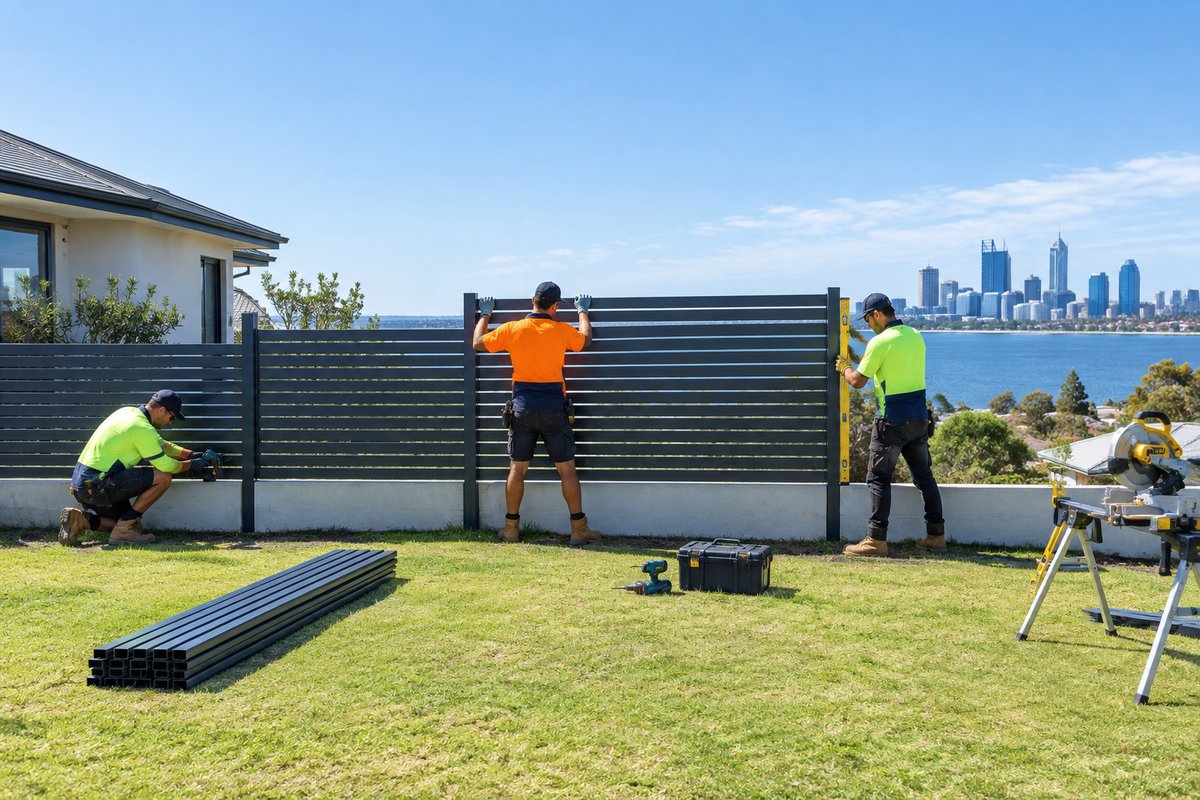
Modern aluminium slat fencing, screens and front fences that look sharp and stand up to Perth's sun and coastal air. Call Perth Fencing Experts today!
Request a Free Quote
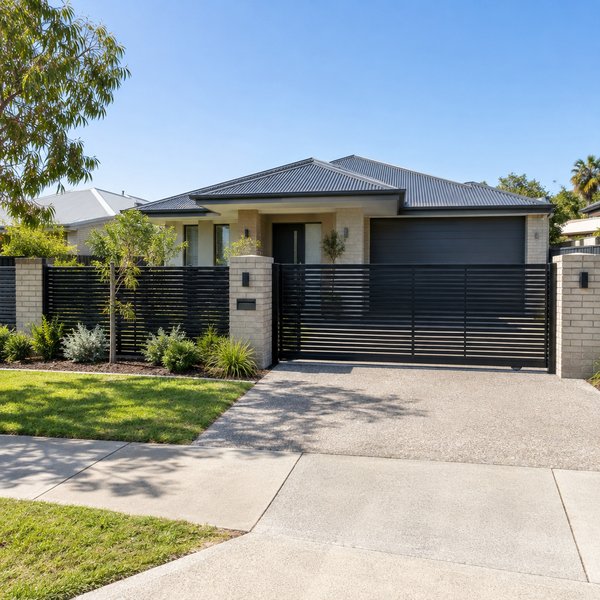
Aluminium slat fencing in Perth has become the go-to choice for modern front yards, courtyards and side boundaries. The fence is made of powder-coated aluminium slats fitted between aluminium posts. The slats run horizontally with a consistent gap that you choose to suit your privacy needs. Unlike timber, the slats won't rot, warp or get eaten by termites. Unlike solid sheet panels, they let air through, so your yard doesn't feel boxed in. Many owners finish the job with a matching slat gate for the driveway or side access, so the whole street frontage looks like one design.
Perth conditions shape how we build every slat fence. Most suburbs sit on loose sand, so post footings need enough depth and concrete to stop the fence leaning after a few winters of wet ground and strong fronts. Closer to the coast, salt carried on the afternoon sea breeze attacks cheap coatings and plain steel screws. That's why we specify powder coat suited to coastal exposure and use stainless steel fixings. They help prevent the corrosion that shows up as white bloom and bubbling paint around screw holes.
A common job for us is a tired brick-and-pier front fence with faded infill panels. Another is a new build where the builder left a bare limestone retaining wall on the boundary. In both cases we can mount slat panels on base plates bolted to the existing wall or slab, or set new in-ground posts if the structure isn't sound enough. Slat screening also works well around outdoor kitchens, bin areas and air-conditioning units. If you're planning a pool area, ask us about pool fencing, because slat designs need specific gap and climbability details to meet the pool barrier rules.
From measuring the boundary to fitting the last post cap, here's what happens on site.
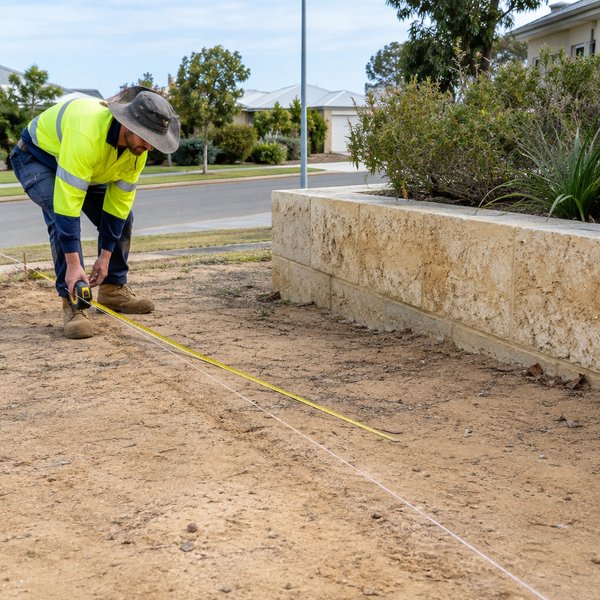
We walk the fence line, measure every run and check the fall of the ground with a level and string line. We look for reticulation lines, underground services, tree roots and the condition of any existing walls or piers. Then we confirm slat colour, gap size and fence height with you before anything is ordered.
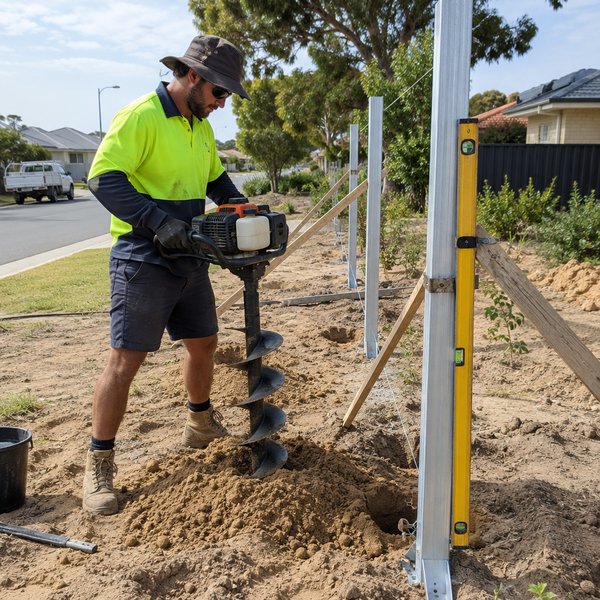
For in-ground posts we auger holes, set each post plumb and pour concrete, allowing for the depth that loose sand needs. Where the fence sits on a slab or retaining wall, we drill and fix base plates with anchors suited to the material. Every post is checked against the string line so the slats run straight from end to end.
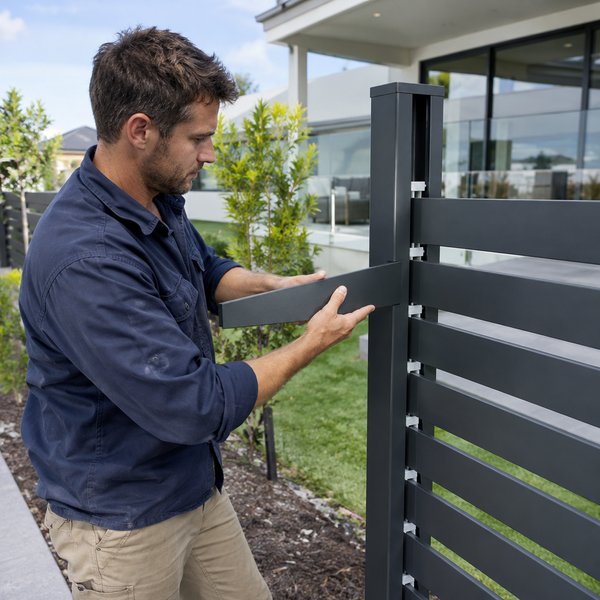
The slats are cut to length and fitted into the post channels or fixed with stainless steel screws, depending on the system. Spacers keep the gap even all the way up the panel. On sloping blocks we step each panel or rake the line so the fence follows the ground neatly.
We hang any gates, adjust hinges and latches, and fit post caps and end covers to seal out water and debris. Metal offcuts and swarf are swept up so they can't leave rust spots on paving. We remove old fencing and leave the site tidy.
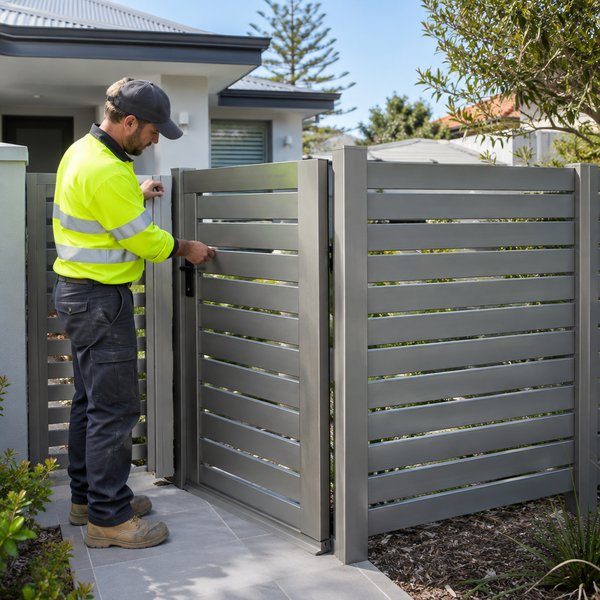
Practical advantages for hot summers, coastal winds and busy households.
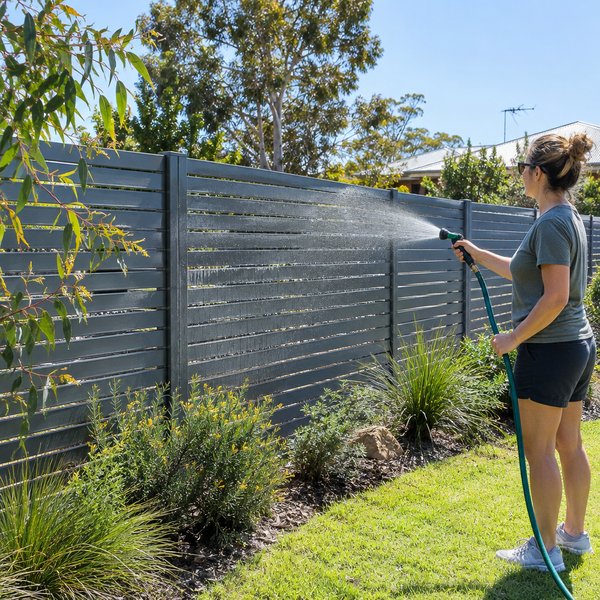
Powder-coated aluminium doesn't need sanding, staining or painting each year like timber does. It won't rot, split or attract termites. A wash down with a hose and mild detergent is usually all it needs to look sharp, with more regular rinsing in coastal suburbs.
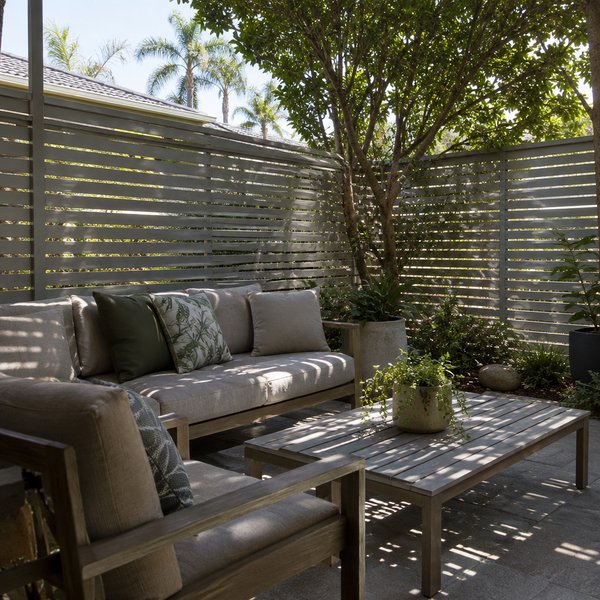
The slat gaps break up sightlines from the street while still letting air move through. That matters in Perth, where the afternoon sea breeze is welcome relief in summer. Air passing through also puts less wind load on the fence than a solid panel during winter storms.
Slat fencing gives older homes a modern update and suits new builds straight away. With matching gates and screens in the same colour, the front of your property looks planned rather than pieced together. It's one of the quickest ways to lift kerb appeal before selling or leasing.
We know how quickly a fence can lean in loose coastal and Swan Coastal Plain sands. We set post depth and concrete to suit the soil on your block. That keeps the slat lines straight over the long term.
If you're within reach of salt air, we spec the coating and fixings to suit. Using stainless screws and properly capped posts heads off the white corrosion and bubbling we often see on cheaper installs.
We build the fence, the gates and any matching screens, so colours, slat sizes and gaps line up across the whole property. You deal with one team instead of coordinating several trades.
Perth yards are full of reticulation, limestone walls and brick piers. We check for these before we dig or drill, and we protect paving and gardens while we work.
Common questions answered
The main factors are the total length, the fence height, how tight you want the slat gaps and whether we're setting new posts or mounting onto an existing wall. Sloping ground, removing old fencing, coastal-grade coating and adding gates all change the price. We measure on site and give you an itemised quote so you can see where the cost sits.
Aluminium itself doesn't rust like steel, but salt air can damage poor coatings and cause corrosion around the wrong type of screws. For coastal suburbs we use powder coat suited to marine exposure and stainless steel fixings. Rinsing the fence with fresh water every so often helps wash off salt build-up.
Often, yes. We check the wall first, because the fence adds load and catches wind, and a cracked or loose wall can't hold base plates properly. If the wall is sound we fix base plates into it, and if not we can set posts behind it or talk you through other options.
It depends on the length of the fence, how many gates are involved and whether old fencing has to come out first. Concrete footings need time to cure before slats go on, and custom colours or gates can take longer to come in. We'll give you a realistic timeframe when we quote.
Front fences usually have height and visibility rules set by your local council, especially near driveways and corners. Side and rear boundary fences are covered by WA's dividing fence laws, which means talking to your neighbour about the shared fence. We can help you check the local requirements before work starts.